Taipei history in short
Taipei history is often told as a story of walls and ports, but the basin was inhabited long before. The city's own history describes the Ketagalan as earlier residents, followed by Han settlements and trade along the Tamsui River. It would be wrong to say that Taipei was first settled in 1884, the year the walled city was completed.
This page is a compact timeline tied to places you can see today. The dates come from the city's official history and from the park and museum administrations, and the sections follow them in order, from the earliest residents to the late twentieth century. For modern sights go to things to do in Taipei.

A food walk through old Dadaocheng
This three-hour walk covers Dadaocheng and Dihua Street, two of the older districts of the city.
Hand-picked tours, booked through Viator. Prices are indicative starting prices in US dollars (as of October 2026). Tap a tour for live availability and the current price in your currency.

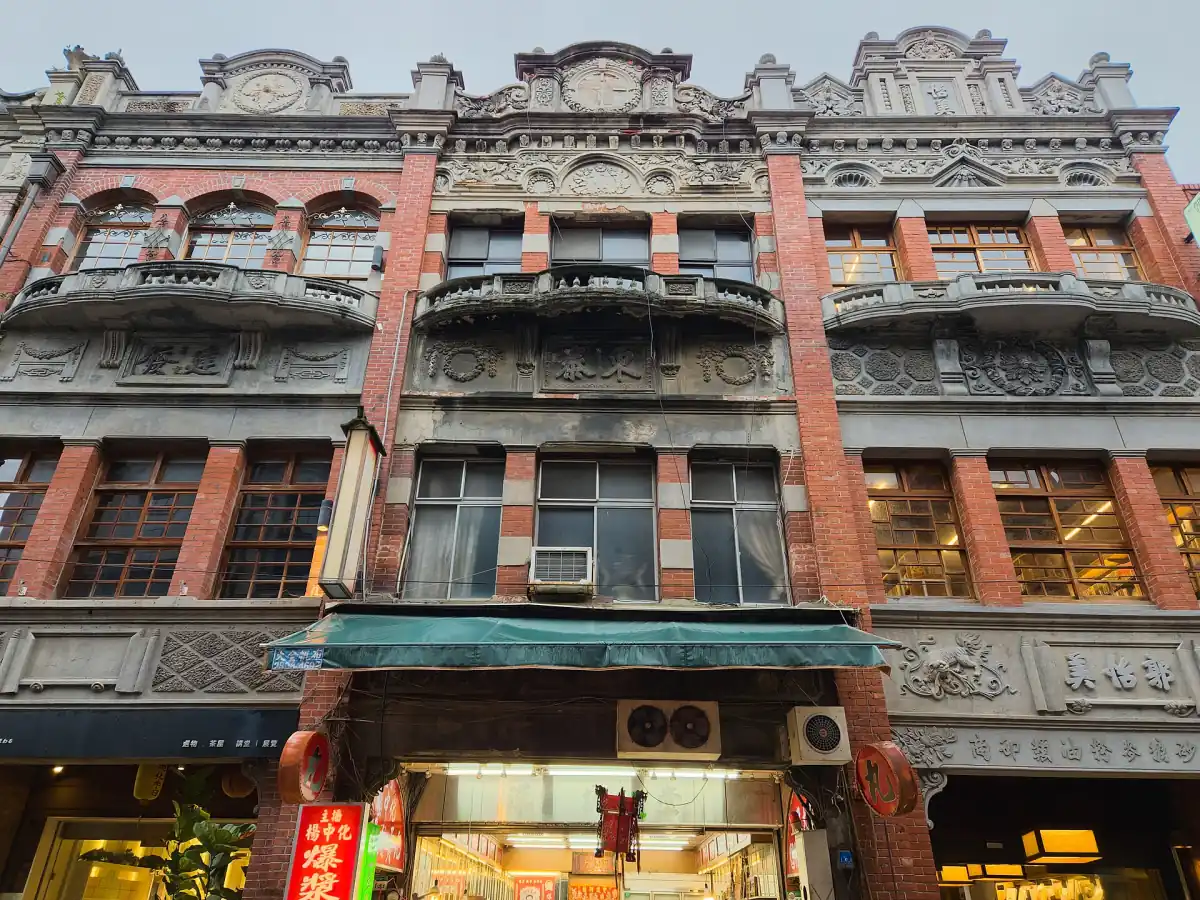
Photos – Dadaocheng and Dihua Street food walk: Detail of a photo by Junyu-K / CC BY-SA 4.0

A food walk through Dadaocheng
Dadaocheng and Dihua Street feature in this three-hour small-group walk with a local English-speaking guide and 12 or more tastings. It starts at Beimen MRT station, exit 3. It is a food tour, not a history lecture.
The Ketagalan and the Taipei Basin
The official city history names the Ketagalan as earlier inhabitants of the Taipei Basin. Later Han settlers came, and trade developed along the Tamsui River. This earlier layer is easy to miss in a city known for its skyline, but it explains why the river and the basin shaped later settlements.
Mengjia (Wanhua) and the 1709 land deed
The 1709 Chen Lai-zhang land deed is linked in the city's account to larger agricultural development. Mengjia, today's Wanhua district, grew as an early market and trading place. The district is also home to Longshan Temple and Ximending; see where to stay for the area today.
Dadaocheng and the tea trade (1863)
In the nineteenth century Dadaocheng developed with foreign trade into a centre of tea processing and tea export. The official account gives 1863 for its role as a foreign trade port. Dihua Street is the street that food walks through the district follow, so a short walk there is an easy way to see the neighbourhood.
The walled city (1875 and 1884)
The Taipei Prefecture is dated to 1875, and the walled city was completed in 1884. This is the walled city that Japanese administration later reshaped, as the next section describes.
Japanese era city planning (1895 to 1945)
Official architectural history describes Japanese administration from 1895, with new city planning and the removal of the city walls. The former town hall served the new provincial administration from 1945. These layers explain why the street grid and many public buildings look the way they do. The National Palace Museum belongs to a different, later story and is covered on its own page.
Beitou Hot Spring Museum and Yangmingshan
The former public bath in Beitou was restored and reopened as the Beitou Hot Spring Museum on 31 October 1998. The museum and the open-air bath in Beitou Park are separate places. Yangmingshan National Park was announced in 1985, and its administration was set up on 16 September 1985. See Beitou and Yangmingshan.
Timeline at a glance
| Year | Event |
|---|---|
| 1709 | Chen Lai-zhang land deed, Mengjia as an early market place |
| 1863 | Dadaocheng as a foreign trade port |
| 1875 | Taipei Prefecture |
| 1884 | Walled city completed |
| 1895 | Start of Japanese administration and new city planning |
| 1985 | Yangmingshan National Park administration established |
| 1998 | Beitou Hot Spring Museum reopened |
Taipei history: frequently asked questions
Who lived in the Taipei Basin first?
The city history names the Ketagalan as earlier residents, followed by Han settlements and trade along the Tamsui River.
When was the walled city of Taipei completed?
In 1884. The prefecture was set up in 1875.
Why is Dadaocheng important?
It became a centre of tea processing and tea export, and the official account gives 1863 for its role as a foreign trade port.
When did the Beitou Hot Spring Museum open?
The restored former public bath reopened as a museum on 31 October 1998.